

Cleaning a rug without water can be a practical option when moisture may damage the fibers or quick drying is important. This method focuses on removing dust, debris, odors, and light surface stains without soaking the rug. The right approach depends on the rug’s material, construction, and level of soiling. Guidance from rugservicecenter can also help users choose safer dry-cleaning techniques that match the rug’s specific needs. Using the right method helps protect the rug’s texture, color, and overall condition.
Best Water-Free Rug Cleaning Methods for Area Rugs
The best water-free rug cleaning method depends on the rug’s fiber, construction, and type of soil. Regular vacuuming works well for loose debris, while a fiber-safe dry compound can help remove more embedded surface soil without soaking the rug. Delicate, handmade, or dye-sensitive rugs require extra caution, and any cleaning product should first be tested on a hidden area. WoolSafe specifically recognizes dry-cleaning compounds as a low-moisture cleaning option and recommends using independently tested products for sensitive wool fibers.
| Method | Best For | Common Applications | Key Precaution |
|---|---|---|---|
| Dry Vacuuming | Loose dust, grit, hair, and surface debris | Routine maintenance and light cleaning | Use gentle suction on delicate or handmade rugs. |
| Dry Absorbent Compound | Embedded surface soil and light oily residue | Refreshing rugs that should not be soaked | Choose a product suitable for the rug fiber. |
| Dry Spot Treatment | Small localized marks and oily spots | Targeted cleaning of specific areas | Test the treatment on a hidden area first. |
| Professional Dry Cleaning | Delicate, handmade, or valuable rugs | Deep soil and moisture-sensitive materials | Use a specialist familiar with the rug material. |
Regular vacuuming is also recommended by major rug manufacturers for removing loose soil, with gentler techniques advised around fringes and delicate pile.

How to Deep Clean an Area Rug Using Water-Free Cleaning Methods
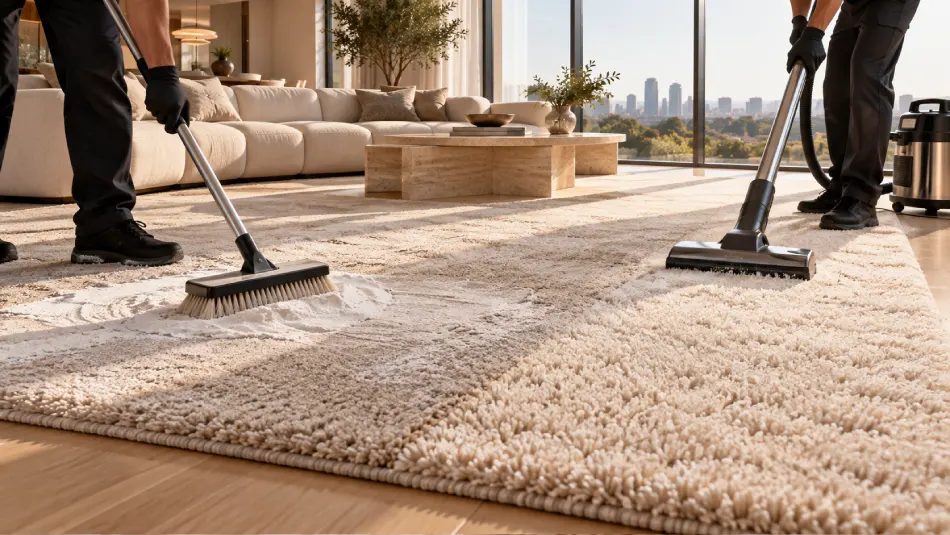
Deep cleaning an area rug without water starts with thorough vacuuming to remove dust, grit, and loose debris from the pile. Next, apply a dry cleaning compound suitable for the rug’s fiber and gently work it into the surface if the product instructions allow.
Leave the compound for the recommended time so it can absorb embedded soil, then vacuum the rug several times until all residue is removed. Always test the product on a hidden area first, and avoid aggressive brushing on delicate, handmade, silk, or viscose.
Benefits of Water-Free Rug Cleanin
Water-free rug cleaning can reduce moisture-related risks, shorten drying time, and make routine maintenance more practical for rugs that should not be heavily wetted. It is especially useful for moisture-sensitive fibers and for removing dry soil or light surface contamination between deeper professional cleanings. However, the method must still match the rug’s fiber, construction, and condition.
| Benefit | Why It Matters | Best Application |
|---|---|---|
| Less Moisture Exposure | Helps reduce problems associated with excessive wetting and prolonged drying. | Moisture-sensitive and delicate rugs |
| Faster Return to Use | Little or no drying period is required compared with heavily wet cleaning. | Busy rooms and frequently used rugs |
| Effective Dry-Soil Removal | Dry compounds and thorough vacuuming can loosen and remove surface and embedded dry soil. | Routine and interim maintenance |
| Lower Risk of Over-Wetting | Limits exposure to excess moisture that may contribute to color or texture problems. | Wool, viscose, and other moisture-sensitive fibers |
| Convenient Maintenance | Allows selected rugs to be refreshed without a full wet-cleaning process. | Lightly soiled rugs between deeper cleanings |
These advantages are most relevant for light to moderate soil. Heavy staining, deeply embedded contamination, or valuable delicate rugs may still require specialist treatment.
Tools and Ingredients You’ll Need for Water-Free Rug Cleaning
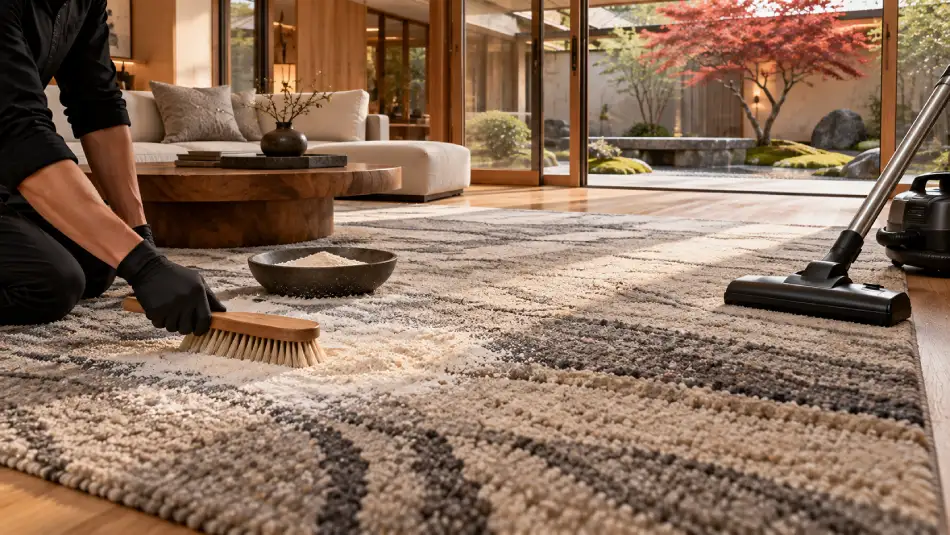
Water-free rug cleaning works best when you use tools that remove soil without saturating the fibers.
The right equipment depends on the rug’s material, pile, construction, and level of soiling.
Gentle tools are especially important for wool, handmade, and delicate rugs.
Cleaning products should always be compatible with the specific fiber and tested before wider use.
Using suitable tools also helps prevent residue buildup, fiber distortion, and unnecessary wear.
Vacuum Cleaner with Adjustable Suction
A vacuum removes loose dust, hair, grit, and debris before any dry cleaning treatment is applied.
Adjustable suction is preferable for delicate or high-pile rugs because excessive force may disturb the fibers.
Fiber-Safe Dry Cleaning Compound
A dry cleaning compound helps absorb and loosen soil that remains within the upper layers of the rug.
Choose a product specifically approved for the rug’s fiber rather than using a general household powder.
Soft-Bristled Brush
A soft brush can help distribute an approved dry compound evenly through the surface fibers.
Brush gently in the direction of the pile and avoid aggressive scrubbing that could alter the rug’s texture.
Clean White Cloth
A clean white cloth is useful for testing cleaning products and treating small localized marks.
White fabric makes it easier to notice dye transfer, which can indicate that the treatment is unsafe to continue.
Blunt Spoon or Scraper
A blunt spoon or similar tool can carefully lift dried residue before vacuuming or spot treatment.
It should be used gently to avoid pulling fibers or pushing debris deeper into the rug.
Selecting the right tools is just as important as choosing the cleaning method itself. For valuable, heavily soiled, silk, viscose, or structurally fragile rugs, professional treatment may be safer than experimenting with household products.
Optional Ingredients for Water-Free Rug Cleaning
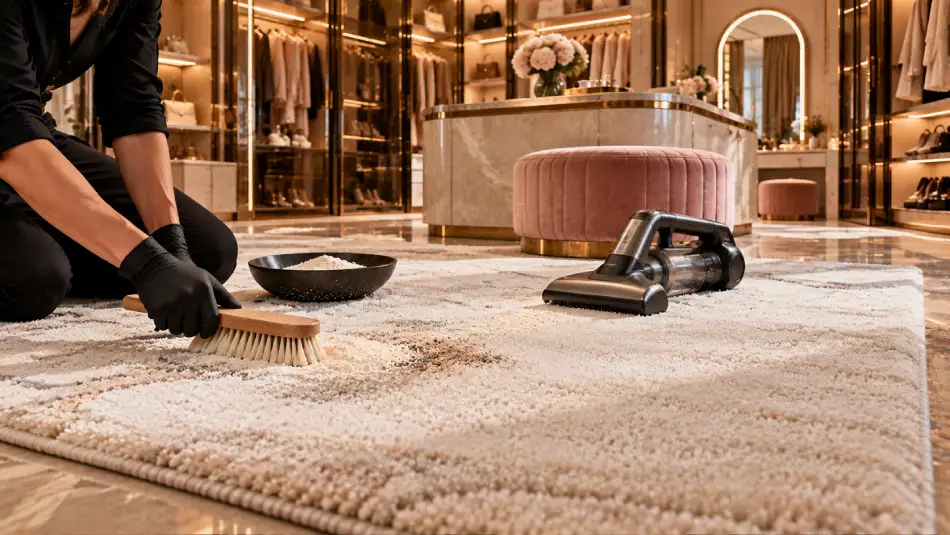
Optional ingredients can improve water-free rug cleaning when basic vacuuming is not enough to remove light soil, residue, or localized marks. A fiber-safe dry cleaning compound is one of the most practical options because it can absorb soil and then be removed by vacuuming. Low-moisture encapsulation products may also be suitable for certain fibers when used according to the manufacturer’s directions.
Always choose products specifically designed for the rug’s fiber and test them on a hidden area before wider application. This is especially important for wool, jute, sisal, handmade, and other moisture-sensitive rugs, where unsuitable ingredients can affect color, texture, or backing.
Common Mistakes to Avoid During Water-Free Rug Cleaning
Water-free rug cleaning can be safe and effective, but incorrect products or techniques may damage fibers, affect color, or leave unwanted residue. Following the rug’s care instructions and using products designed for its specific material can help reduce these risks.
- Using the Wrong Cleaning Product
- Applying Too Much Dry Cleaning Compound
- Leaving Residue in the Rug Fibers
- Using Aggressive Vacuum Settings
- Skipping a Hidden-Area Test
Avoiding these common mistakes helps protect the rug’s texture, appearance, and structure. Extra care is especially important for handmade, wool, silk, viscose, and other delicate rugs.

How Often Should You Clean Area Rugs Using Water-Free Methods?
The ideal cleaning frequency depends on foot traffic, pets, fiber type, and how quickly soil builds up. For most area rugs, regular vacuuming once a week is a good baseline, while high-traffic areas may need attention two or three times weekly.
A deeper water-free treatment with a suitable dry compound should be done only when the rug looks dull, holds noticeable soil, or needs refreshing—not on a rigid schedule. Delicate or valuable rugs should be cleaned less aggressively and according to their care instructions to avoid unnecessary fiber wear.
Conclusion
Knowing how to clean a rug without water can help remove everyday dust, light soil, and surface residue while limiting unnecessary moisture exposure. The best results come from choosing methods and products that match the rug’s specific fiber and construction, using gentle techniques, and avoiding excessive product application. Regular maintenance can also reduce the need for intensive cleaning, while valuable, delicate, or heavily soiled rugs are generally safer in the hands of an experienced professional.