

To understand how to place a rug in a living room, focus on creating a balanced connection between the rug and the seating area. In most layouts, the rug should extend beneath at least the front legs of the sofa and chairs so the space feels unified rather than divided. Keeping the rug proportionate to the furniture and leaving some visible flooring around it also helps the room look more intentional. For more practical rug care and placement guidance, rugservicecenter offers useful insights for creating a well-balanced living space.
Best Way to Place a Rug in the Living Room
The best way to place a rug in the living room is to use it as an anchor for the entire seating arrangement rather than treating it as a decorative piece beneath the coffee table. For most living rooms, the most flexible layout is to place at least the front legs of the sofa and chairs on the rug, creating a clear visual connection between the major furniture pieces. Larger rooms can support an all-legs-on arrangement, while smaller spaces require careful sizing so the rug does not appear isolated or undersized.
| Living Room Situation | Recommended Rug Placement | Professional Placement Tip |
|---|---|---|
| Most Standard Living Rooms | Place the front legs of the sofa and all primary chairs on the rug while leaving the rear legs on the floor. | This is usually the most versatile arrangement because it visually connects the seating without requiring an oversized rug. |
| Large Living Rooms | Choose a large rug that allows the sofa, chairs, and other main seating pieces to sit completely on it. | Keep a visible border of flooring around the rug rather than pushing it directly against the walls. |
| Small Living Rooms | Use a rug large enough to reach beneath the front legs of the main seating instead of selecting one that sits only beneath the coffee table. | An undersized rug can visually break the seating area into separate pieces and make the layout feel more cramped. |
| Open-Plan Living Areas | Center the rug beneath the seating group so its edges clearly define the living zone from nearby dining or circulation areas. | Position the rug according to the furniture grouping rather than automatically centering it within the entire open room. |
| Rooms With a Strong Focal Point | Align the rug with the main seating arrangement and important architectural feature, such as a fireplace or large window. | The rug should reinforce the furniture orientation and conversation area rather than competing with the room’s natural visual axis |
For most homes, the front-legs-on arrangement is the safest starting point because it anchors the sofa and chairs while preserving flexibility in rug size. Crate & Barrel recommends choosing a rug large enough for at least the front legs of the main seating to rest on it and generally leaving about 12–18 inches of exposed flooring between the rug and the walls.
How to Choose the Right Rug Size for a Living Room
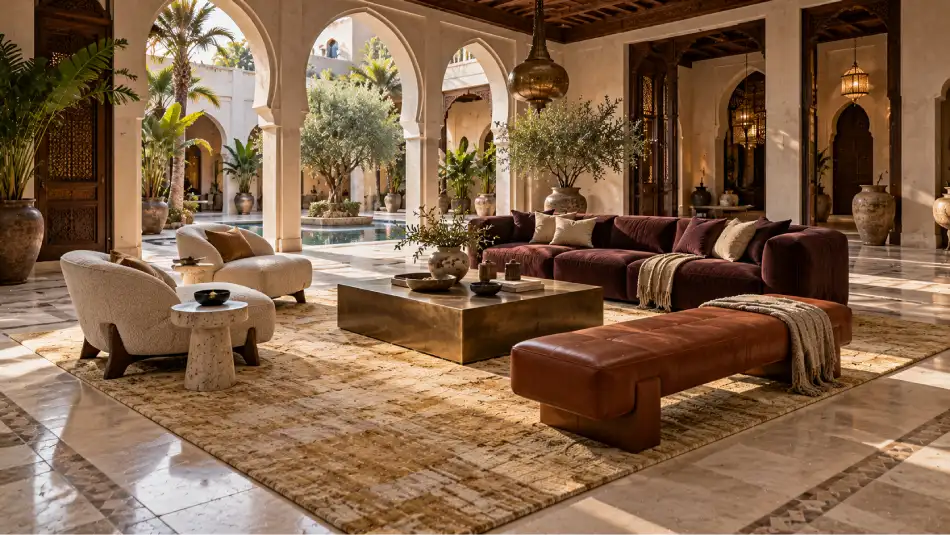
Choosing the right rug size depends more on the furniture arrangement than on the room dimensions alone.
The rug should be large enough to visually connect the main seating pieces without overwhelming the available floor space.In most living rooms, an 8′ × 10′ or 9′ × 12′ rug is a practical starting point, but the final choice should follow the actual seating footprint.Measuring the arranged furniture before buying is far more reliable than selecting a rug based only on a standard size chart.
Measure the Seating Area, Not Just the Room
Measure from the outer edges of the sofa and chairs after they are positioned where you actually want them. This gives you a realistic footprint and prevents choosing a rug that looks appropriately sized in an empty room but too small once the furniture is added.
Make Sure the Rug Extends Beyond the Sofa
A well-proportioned rug should normally extend beyond both ends of the sofa rather than ending directly beneath its edges. An extension of at least several inches on either side creates a more balanced appearance and prevents the sofa from visually overpowering the rug.
Choose the Size According to Furniture Placement
If only the front legs of the sofa and chairs will rest on the rug, a moderately sized option may be sufficient. For a layout where all furniture legs sit completely on the rug, you will need a considerably larger size to maintain comfortable spacing around each piece.
Leave Enough Visible Floor Around the Rug
Avoid choosing a rug that reaches almost wall to wall unless the room specifically calls for that effect. Leaving approximately 12–18 inches of visible flooring around the rug often creates a defined seating zone while preserving a sense of space.
Test the Rug Dimensions Before You Buy
Mark the proposed rug dimensions on the floor with removable painter’s tape and view the outline from entrances, seating positions, and main walkways. This simple test makes it much easier to identify a rug that is too small or disproportionately large before making a purchase.
How to Position a Rug in Relation to the Sofa
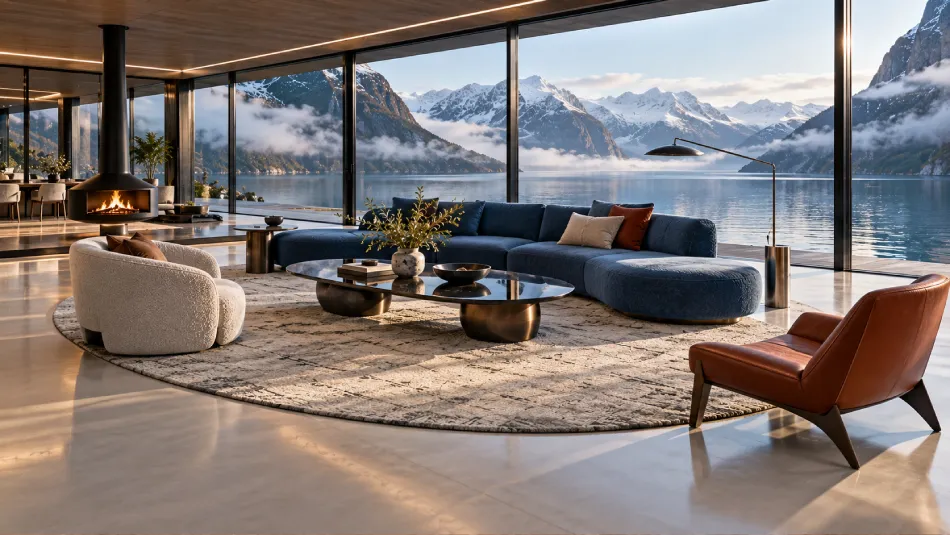
When learning how to place a rug in a living room, the relationship between the rug and sofa is one of the most important visual considerations.
The rug should connect the sofa to the rest of the seating area rather than appear as a separate element in the center of the floor.
In most layouts, placing at least the front sofa legs on the rug creates a more cohesive and intentional arrangement.
The best position ultimately depends on the sofa size, room proportions, and the amount of floor space available around the seating zone.
Place the Front Sofa Legs on the Rug
For most standard living rooms, placing the front two sofa legs on the rug creates a strong visual connection without requiring an oversized rug.Keep the placement deep enough that the legs sit securely on the surface rather than resting close to the edge.
Place the Entire Sofa on the Rug in Larger Rooms
If the living room is spacious, positioning all four sofa legs on the rug can make the seating zone feel more defined and luxurious.This arrangement works best when the rug extends visibly beyond the sofa instead of ending immediately around its footprint.
Let the Rug Extend Beyond Both Ends of the Sofa
Avoid using a rug that is noticeably narrower than the sofa, as it can make the furniture appear visually heavy and disconnected.Allowing the rug to extend beyond both sofa arms generally produces a more balanced and professionally planned composition.
Center the Rug With the Sofa, Not the Entire Room
The rug should usually align with the main seating arrangement rather than with the architectural center of the living room.This is particularly important in open-plan or asymmetrical spaces where the sofa defines the actual functional seating zone.
Keep Sofa and Rug Placement Consistent Across the Seating Area
If the sofa has its front legs on the rug, apply the same general positioning to nearby chairs whenever the layout allows.Consistent contact between the rug and seating pieces helps the furniture read as one connected conversation area instead of separate elements.
Should All Living Room Furniture Sit on the Rug?
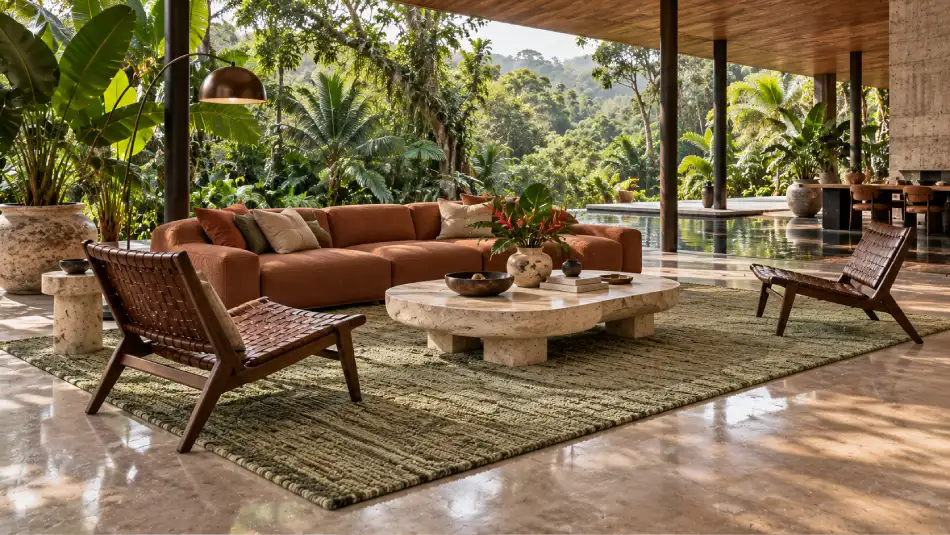
No, all living room furniture does not need to sit completely on the rug. In larger rooms, placing the entire seating group on the rug can create a polished, unified look, while smaller spaces often work better with only the front legs of the sofa and chairs resting on it. The key is consistency: the main seating pieces should relate to the rug in a similar way rather than using several different placement styles. A rug that visually connects the furniture will usually look more intentional than one that simply sits beneath the coffee table.
Ideal Distance Between a Rug and the Walls
The ideal distance between a rug and the walls is generally 6 to 18 inches, depending on the size and proportions of the living room.In an average-sized room, leaving about 12 to 18 inches of visible flooring usually creates the most balanced and intentional appearance.
Smaller rooms can use a narrower border, while larger spaces often benefit from more exposed flooring around the rug.For the best result, keep the spacing reasonably consistent on all sides so the rug looks centered and properly scaled to the room.
How to Place a Rug in a Small Living Room
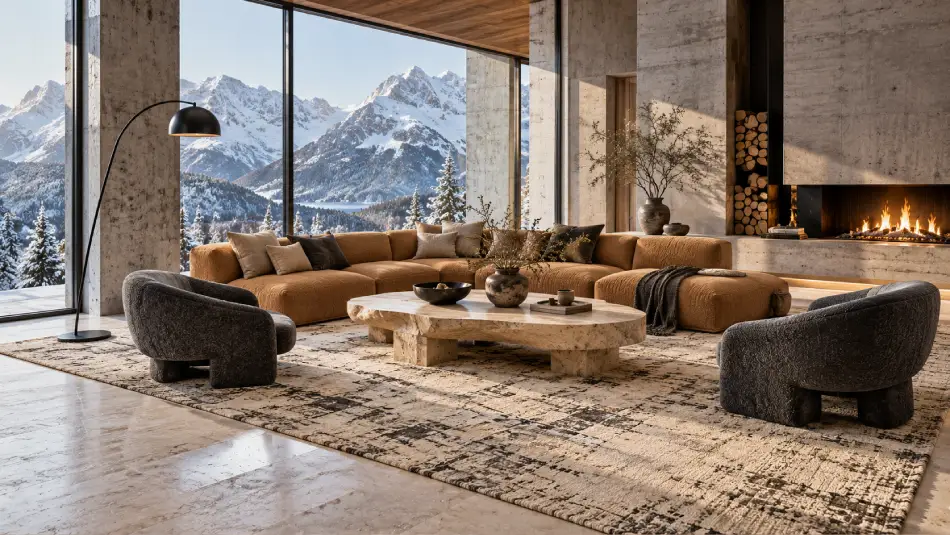
In a small living room, the rug should define the seating area without making the floor feel crowded or fragmented.
A practical approach is to place the front legs of the sofa and chairs on the rug, which visually connects the furniture while preserving open floor space.
Choose a rug that is at least as wide as the sofa and, when possible, extends slightly beyond both sides for better proportion.Avoid using a very small rug that sits far from the seating, as this can make a compact room appear even smaller and less cohesive.

Common Mistakes When Placing a Rug in a Living Room
One of the most common mistakes when learning how to place a rug in a living room is choosing a rug that is too small for the seating arrangement. A rug should visually connect the sofa and chairs rather than appear as an isolated piece beneath the coffee table. Current design guidance generally recommends that at least the front legs of the main seating rest on the rug, while larger rooms can accommodate all furniture legs on it
| Common Mistake | Why It Causes a Problem | Better Approach |
|---|---|---|
| Choosing a Rug That Is Too Small | A small rug can make the furniture appear disconnected and may visually shrink the seating area instead of defining it. | Choose a size that reaches beneath at least the front legs of the sofa and main chairs. |
| Placing the Rug Only Under the Coffee Table | This creates a small visual island in the center of the room while leaving the sofa and chairs disconnected from the rug. | Extend the rug far enough to overlap the primary seating arrangement rather than surrounding only the coffee table. |
| Using Inconsistent Furniture Placement | When one chair is fully on the rug, another is completely off it, and the sofa barely touches it, the arrangement can look accidental. | Use a consistent rule: front legs on the rug for the main seating, or all legs on when the rug is large enough. |
| Pushing the Rug Too Close to the Walls | A rug that nearly reaches every wall can lose its role as a distinct anchor and make the floor layout feel visually crowded. | Leave a visible border of flooring around the rug; around 12–18 inches is a useful starting point in many living rooms. |
| Centering the Rug in the Room Instead of the Seating Area | The architectural center of the room is not always the center of the furniture arrangement, especially in open-plan or asymmetrical spaces. | Center the rug relative to the sofa, chairs, and conversation zone so the entire arrangement reads as one intentional group. |
The most important mistake to avoid is undersizing the rug. Architectural Digest notes that a rug that is too small can disrupt proportion and make the furniture grouping feel less unified, while Room & Board recommends extending the rug beyond the sofa and keeping at least the front legs of the main seating on it.
An Overview
The best way to place a rug in a living room is to balance its size, position, and relationship with the furniture.
A properly placed rug should visually connect the seating area while leaving enough surrounding floor space to keep the room open and balanced.
Whether the furniture sits fully or partially on the rug depends on the room size and layout, but consistency is always essential.Careful measuring before placement helps create a living room that feels cohesive, comfortable, and professionally arranged.